Global Financial Crisis
Rev 6:5-6 And when He had opened the third seal, I heard the third living creature say, Come and see. And I looked, and lo, a black horse. And he sitting on it had a balance in his hand. (6) And I heard a voice in the midst of the four living creatures say, A choenix of wheat for a denarius, and three choenixes of barley for a denarius. And do not hurt the oil and the wine.

This rider represents hunger and famine. The horse he rides is black, a color that describes a famine-racked body.

A scale would be used to measure and carefully dole out food. The denarius was a Roman silver coin equal in value to the daily wage of a working man. There will only be enough food for every day and this will be seen in the financial health of our Global Economy which is due to fail soon.

Saturday, 30 April 2011

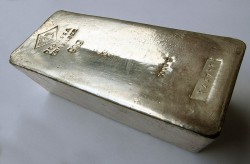
29/04/11 - Why Investors Are Buying Silver As If There Is No Tomorrow

Why Investors Are Buying Silver As If There Is No Tomorrow

Posted on Pakalert on April 28, 2011 // 1 Comment
[Translate]

The American Dream
The price of silver has been absolutely exploding lately.  It has reached heights not seen since the Hunt Brothers attempted to corner the silver market over three decades ago.  But this time there are no Hunt Brothers to blame for the stunning rise in the price of silver.  So exactly why are investors buying silver as if there is no tomorrow right now?  Well, the truth is that there are a lot of reasons.  Investors have been flocking to precious metals such as gold and silver as the value of paper currencies has declined.  The euro is incredibly weak right now and the U.S. dollar appears to be on the verge of a major collapse.  In fact, the entire financial system is highly unstable right now.  In such an environment, investors seek some place safe to park their money, and right now gold and silver are seen as safe harbors.  But gold and silver have not been going up in price at the same pace.  So why is silver outperforming gold so significantly?

The price of silver has increased by more than 150% over the past 12 months.  But the price of gold has only gone up about 30%.

If you invested $100 in the S&P 500 ten years ago it would be worth about$107.48 today.
If you invested $100 in gold ten years ago it would be worth about $569 today.
If you invested $100 in silver ten years ago it would be worth about $1037today.

Clearly something is going on with silver.

Many people are convinced that this is part of a correction that is long overdue.  Geologists tell us that there is approximately 17.5 times as much silver in the crust of the earth as there is gold.  But today the price of an ounce of gold is about 30 times higher than the price of an ounce of silver.
That would seem to indicate that the price of silver still has a lot of room to grow relative to the price of gold.
In addition, silver is a key industrial commodity and it is constantly being used up.  Today, silver is used in a vast array of products and medicines.  The following is an excerpt from an official U.S. government report that describes just some of the ways silver is used in society today….
Silver’s traditional use categories include coins and medals, industrial applications, jewelry and silverware, and photography. The physical properties of silver include ductility, electrical conductivity, malleability, and reflectivity. The demand for silver in industrial applications continues to increase and includes use of silver in bandages for wound care, batteries, brazing and soldering, in catalytic converters in automobiles, in cell phone covers to reduce the spread of bacteria, in clothing to minimize odor, electronics and circuit boards, electroplating, hardening bearings, inks, mirrors, solar cells, water purification, and wood treatment to resist mold. Silver was used for miniature antennas in Radio Frequency Identification Devices (RFIDs) that were used in casino chips, freeway toll transponders, gasoline speed purchase devices, passports, and on packages to keep track of inventory shipments. Mercury and silver, the main components of dental amalgam, are biocides and their use in amalgam inhibits recurrent decay.
Estimates vary, but many experts are now projecting that at current consumption rates we will run out of silver at some point during this century.

On the other hand, we are not facing a similar problem with gold.  Gold, because it has traditionally been so expensive, is not used in many products at all.  The total amount of gold on earth just continues to increase each year.

Silver is also considered to be a lot more accessible for smaller investors.  Not many average Americans can afford to do much investing in gold because it is so expensive.  But just about anyone can afford a few ounces of silver.

As investors around the globe have watched the Federal Reserve create endless amounts of money and as they have watched the  U.S. government borrow endless amounts of money the hunger for precious metals has grown.

The following is what John Browne had to say about the current situation in a recent commentary….
Today, with the Federal Reserve treating the greenback as a never ending lottery ticket for deficit spending politicians, many investors feel the U.S. dollar is good for nothing. As a result there is an increasing international pressure to remove the U.S. dollar’s reserve status. Given that there is no widely accepted alternative to the dollar (the euro has many problems of its own), this is creating fears of an international currency crisis, which has fueled interest in precious metals.
As the U.S. dollar and other paper currencies continue to decline, the demand for precious metals such as gold and silver is only going to increase.

Most investors are not stupid.  They know that the European debt crisis is approaching a meltdown.  They know that U.S. government debt is not sustainable.  They know that all of the paper currencies around the world that are backed by nothing will continue to decline in value just like they always have.  All of the major central banks have been recklessly printing money.  In such an environment it only makes sense to put your wealth into hard assets.

But there is another layer to all of this.  Many now view investing in precious metals as a way to rebel against the Federal Reserve and other central banks.  All over the globe people are waking up to how unjust the banking system is.  Since central banks such as the Federal Reserve are almost completely unaccountable politically, many individuals have sought other ways to protest the system.  Getting out of “Federal Reserve Notes” and into precious metals is one small way to do that.

In any event, what is clear is that the price of silver is likely to continue to go up over the long-term.  Silver is used in thousands of products and we are slowly running out of it.  Meanwhile, the central banks of the world are absolutely flooding the globe with paper currency.  What all of that adds up to is a much higher price for silver.
So what do all the rest of you think about the price of silver?  Please feel free to leave a comment with your opinion below….


25Share

People who read this article also read:

  • 8 Reasons Why Silver Is the Investment of the Decade
  • Which Of The Currencies Of The World Is Going To Crash First?
  • 10 US States Have Introduced Gold As Currency
  • Silver: Still The Investment Of A Lifetime
  • The Coming Silver Crisis
  • Why Silver Will Beat Gold
  • Video: Gerald Celente explains Why Gold continues to Rise
  • Video: The Gold Dinar and The Future of Money
  • The Great Gold Conspiracy and 911
  • Video: Gold and Silver Prices Signal the Destruction of the Dollar
  • Dollar to Become World’s ‘Weakest Currency’ JPMorgan Predicts
  • Winning The Currency War: The Unleasing of a “Financial Nuclear War”
  • Video: Take the red pill and wake up before the system collapses!
  • Videos: 4 Best Methods for Off-the-Grid Food Production
  • Video: How to survive the coming Food Shortage and Hyperinflation
  • 10 Tips to Simplify or Survive During Hard Times
  • Global food system must be transformed ‘on industrial revolution scale’
  • 7 Reasons Food Shortages Will Become a Global Crisis
  • 5 Simple Ways To Prepare For The Coming Food Crisis
  • Saving a Doomed Dollar: Plans B, C, D, and E
Posted by Philip at 13:55 No comments:
Email ThisBlogThis!Share to XShare to FacebookShare to Pinterest
Labels: banking crisis, US

Thursday, 21 April 2011

21/04/2011 - Federal Borrowing on Pace to Hit Debt Limit in Less Than Week


Wednesday, April 20, 2011
By Terence P. Jeffrey (CNSNews.com) - Federal borrowing is on pace to hit the legal limit on the national debt in less than a week.

As set in a law passed by Congress and signed by President Barack Obama on Feb. 12, 2010, the legal limit on the national debt is $14.2940 trillion. As of the close of business Tuesday, according to the Daily Treasury Statement released at 4:00 pm today, the portion of the national debt subject to this legal limit was $14.268365 trillion. (The total national debt, including the portion exempted from the legal limit, was $14.3205 trillion.)

This left the U.S. Treasury with the authority to borrow only an additional $25.635 billion before it hits the statutory debt limit.

On April 4, Treasury Secretary Timothy Geithner sent a letter to Senate Majority Leader Harry Reid (D.-Nev.) in order to warn Congress that the Treasury was approaching the legal debt limit. In an appendix to this letter, Geithner pointed to the rapid pace at which new debt was accumulating.
“On average,” Geithner wrote, “the public debt of the United States increases by approximately $125 billion per month (although there are significant variations from month to month).”
In a 31-day month, $125 billion in new debt works out to an average of $4.03 billion in new debt per day. At that pace, the $25.635 billion in legal borrowing authority the Treasury had left at the close of business on Tuesday would be exhausted in less than seven days.

Geithner’s letter did not spell out the time period he used to determine that the debt increases at approximately $125 billion per month. In fact, according to the official debt figures published by the Treasury itself, the debt has been increasing at a somewhat faster pace than $125 billion per month during the Obama presidency.

On Jan. 20, 2009, the day Obama was inaugurated, the portion of the nation debt subject to the legal limit (a small portion of the debt is exempted from the limit) was $10.568142 trillion. By April 19, 2011, the portion of the national debt subject to the limit had increased to 14.268365 trillion. That means that during the first 821 days of Obama’s presidency the debt increased by $3.700223 trillion—or $4.5 billion per day.

The actual average monthly increase in the debt during Obama’s presidency has been $139.5 billion.
In fact, in the past six days, the debt has increased at a far faster pace than either the $4.03 billion per day average suggested by Secretary Geithner or the $4.5 billion per day that the Treasury has increased the debt since Obama became president. At the close of business last Wednesday, the debt subject to the limit was $ 14.211984 trillion--or $56.381 less than the debt recorded at the close of business Tuesday.

In other words, in the six days of Thursday, Friday, Saturday, Sunday, Monday, Tuesday, the national debt increased $56.381 billion---or almost $9.4 billion per day.
At that pace, the Treasury would exhaust its $25.635 in remaining borrowing authority in less than 3 days.

In his April 4 letter to Sen. Reid, Geithner said the Treasury was then projecting that it would hit the debt limit by May 16.

“The Treasury Department now projects that the debt limit will be reached no later than May 16, 2011,” Geithner wrote. “This is a projection based on the expected level of tax receipts, the timing of our commitments and obligations over the next several weeks, and our judgment concerning the level of cash balances we need to operate.”

Geithner also warned that this projection might change—but not to the advantage of Congress.
“Although these projections could change,” Geithner wrote, “we do not believe that they are likely to change in a way that would give Congress more time in which to act.”
When Treasury is about to reach the debt limit, the Treasury secretary can take certain extraordinary steps to stretch the Treasury’s borrow-and-spending authority.  According to Geithner, however, these extraordinary measures would only give the government another $165 billion in borrowing-and-spending room.

That extra room is about what the government would typically borrow in 40 days—using Geithner’s conservative estimate that it borrows an average of $125 billion per month.
Posted by Philip at 14:50 No comments:
Email ThisBlogThis!Share to XShare to FacebookShare to Pinterest
Labels: Debt, US

Inflation in China Poses Big Threat to Global Trade

Inflation in China Poses Big Threat to Global Trade

European Pressphoto Agency
Fishermen and sellers in a fishing port in Sanya City of Hainan Province, China.
By DAVID BARBOZA
Published: April 17, 2011
    • Linkedin
    • Digg
    • MySpace
    • PermalinSHANGHAI — As the United States and Europe struggle to get their economies rolling again, China is having the opposite problem: figuring out how to keep its revved-up growth engine from generating runaway inflation.

Related in Opinion

  • Room for Debate: China's Scary Housing Bubble
Readers shared their thoughts on this article.
The latest sign that things were moving too fast came on Sunday, when China’s central bank ordered the biggest banks to set aside more cash reserves.

The move essentially reduces the amount of money available for loans, and is an attempt to cool down the economy. It follows the government announcement on Friday that China’s economy was growing at an annual rate of 9.7 percent, by far the strongest performance by any of the world’s biggest economies.
Because China is now the world’s second largest economy, after the United States, and because the country has been a leading source of global growth during the last two years, money problems here can reverberate from Wal-Mart to Wall Street and the world beyond.
High inflation endangers China’s status as the low-cost workshop for the world. And if the government’s efforts to fight inflation cause the economy to stumble, that will cloud the outlook for international businesses — whether multinationals like General Electric or copper miners in Chile — that have been counting on China for growth.
Inside China, inflation also poses a threat to social stability, a particular worry for Beijing, especially since authoritarian governments in North Africa and the Middle East have become the focus of popular uprisings.

“China’s inflation is a big concern, and actual numbers are worse than officially reported,” said Carmen M. Reinhart, an economist at the Peterson Institute for International Economics in Washington.

She says Beijing is engaged in an economic tug of war, trying to encourage sustainable growth while struggling to control inflation.

Food prices are soaring, and the government said on Friday that the consumer price index in March had risen 5.4 percent, its sharpest increase in nearly three years. Hoping to tame inflation, in the last six months Beijing has tightened restrictions on bank lending and raised interest rates on loans (to discourage borrowing) and deposits (to encourage savings).

The decision on Sunday to raise the capital reserve ratio for banks, to 20.5 percent of their cash, was the fourth such increase this year.

The government has also increased agricultural subsidies to curb food prices, and tried to forbid some Chinese companies from raising consumer prices. These efforts stand in contrast to those in the United States, where inflation is low (the underlying annual inflation rate was 1.2 percent last month) and where the debate centers on how much to stimulate the economy given the size of the deficit. Inflation is also running low in Europe, where some countries are imposing harsh austerity measures to pare their budget gaps.

But analysts say the results of this economic management have been mixed. Growth has begun to moderate from its torrid pace of about 10 percent annual growth but inflation has become worse.
For example, housing prices continue to climb even though Beijing has long promised to curb the property market and to spend billions of dollars over the next few years on affordable housing.
The average apartment in central Shanghai now costs more than $500,000. Even in second-tier cities like Chengdu, in central China, the price of a typical home costs about 25 times the average annual income of residents.
Analysts say too much of the country’s growth continues to be tied to inflationary spending on real estate development and government investment in roads, railways and other multibillion-dollar infrastructure projects.
In the first quarter of 2011, fixed asset investment — a broad measure of building activity — jumped 25 percent from the period a year earlier, and real estate investment soared 37 percent, the government said on Friday.
Some of the inflationary factors, like global commodity and food prices, may be beyond Beijing’s ability to influence. Gasoline prices have also jumped sharply, in line with global oil prices. As the world’s largest car market, China’s demand for fuel is soaring, and gasoline prices are close to $4.50 a gallon, up from $3.82 a gallon in late 2009.

Rising food prices, meanwhile, are showing up in various ways — including higher prices at fast-food chains, like Master Kong, which in January raised the price of its popular instant noodles by about 10 percent.

China’s current supercharged boom began in early 2009, during the global financial crisis, when Beijing moved aggressively to increase growth with a $586 billion stimulus package and record lending by state-run banks.

The loose monetary policy, and big investments in local government projects, did revive economic growth. But even at the time there were already concerns about soaring property prices, undisciplined bank lending and the huge debts being amassed by local governments.
Posted by Philip at 14:48 No comments:
Email ThisBlogThis!Share to XShare to FacebookShare to Pinterest
Labels: China, global trade

Monday, 18 April 2011

18/04/2011 - 'One shock away from crisis'

'One shock away from crisis'

Rick Moran
Thus sayeth the president of the World Bank, Robert Zoellick , who is quite worried about the skyrocketing cost of food.

Indeed, from Q1 10 to Q1 11, the rise in the price of basic foodstuffs is astonishing:

Maize

74%

Wheat

69%

Palm oil

55%

Soybeans

36%

Beef

30%

Rice

-2%

Companies have kept prices artificially low but as soon as this fall, we will see wholesale food prices rising precipitously.

Zoellick also wants the World Bank to support the young regimes in the Middle East - including, presumably, the coming Muslim Brotherhood's triumph in Egypt. The BBC:

"Waiting for the situation to stabilise will mean lost opportunities. In revolutionary moments the status quo is not a winning hand."At the Washington meetings, turmoil in the Middle East, volatile oil prices and high unemployment were also discussed.

IMF chief Dominique Strauss-Kahn raised particular concerns about high levels of unemployment among young people.

"It's probably too much to say that it's a jobless recovery, but it's certainly a recovery with not enough jobs," he said.

"Especially because of youth unemployment... there is now a risk that this will be turned into a life sentence, and that there is a possibility of a lost generation," he said.
There have already been a couple of lost generations in European countries with unemployment among the young pushing 25% in England, France, and other nations. With a quarter of young people not working, Europe may be facing the prospect of unemployable masses for decades to come.
Posted by Philip at 15:03 No comments:
Email ThisBlogThis!Share to XShare to FacebookShare to Pinterest
Labels: financial crisis, food
Newer Posts Home
Subscribe to: Comments (Atom)

Labels

  • Australia (1)
  • banking crisis (5)
  • China (7)
  • Crime (1)
  • Debt (7)
  • Depression (3)
  • Europe (13)
  • financial crisis (81)
  • food (2)
  • global trade (4)
  • Gold (3)
  • Greece (6)
  • homeless (1)
  • housing bubble (1)
  • Hyperinflation (1)
  • Italy (1)
  • Japan (1)
  • New World Currency (11)
  • NWO (2)
  • Resession (1)
  • stock market plunges (6)
  • taxes (1)
  • Unemployment (6)
  • US (40)

About Me

My photo
Philip
View my complete profile

Links on Matthew 24 Prophecy fulfilment

  • Home
  • Water in the Desert
  • Dividing the Land
  • Persecution of Believers
  • Wars and Rumours of Wars
  • Earth Changes & Natural Disasters
  • False Messiah's, Prophets and Teachers
  • Technology, Population Reduction & Mark of the Beast

The Prophecies of Abraham

The Prophecies of Abraham

Subscribe To

Posts
Atom
Posts
All Comments
Atom
All Comments

Followers

Blog Archive

  • ▼  2011 (112)
    • ►  November (4)
    • ►  October (10)
    • ►  September (23)
    • ►  August (23)
    • ►  July (18)
    • ►  June (17)
    • ►  May (13)
    • ▼  April (4)
      • 29/04/11 - Why Investors Are Buying Silver As If T...
      • 21/04/2011 - Federal Borrowing on Pace to Hit Debt...
      • Inflation in China Poses Big Threat to Global Trade
      • 18/04/2011 - 'One shock away from crisis'

Total Pageviews

Simple theme. Theme images by jangeltun. Powered by Blogger.