
Showing posts with label banking crisis. Show all posts
Showing posts with label banking crisis. Show all posts
Wednesday, 14 September 2011

 Disaster looms if Greece defaults
 Crisis could unravel markets across the world:
Wednesday, 7 September 2011
7/9/11 - Trigger Effect: While you were sleeping, a banking crisis developed in the Eurozone


Brussels – As Europe struggles to contain its government debt crisis, the greatest fear is that one of the Continent’s major banks may fail, setting off a financial panic like the one sparked by Lehman’s bankruptcy in September 2008. European policy makers, determined to avoid such a catastrophe, are prepared to use hundreds of billions of euros of bailout money to prevent any major bank from failing. But questions continue to mount about the ability of Europe’s banks to ride out the crisis, as some are having a harder time securing loans needed for daily operations. American financial institutions, seeking to inoculate themselves from the growing risks, are increasingly wary of making new short-term loans in some cases and are pulling back from doing business with their European counterparts — moves that could exacerbate the funding problems of European banks. Similar withdrawals, on a much larger scale, forced Lehman into bankruptcy, as banks, hedge funds and others took steps to shield their own interests even though it helped set in motion the broader market crisis. Turmoil in Europe could quickly spread across the Atlantic because of the intertwined nature of the global financial system. In addition, it could further damage the already struggling economies elsewhere. “This crisis has the potential to be a lot worse than Lehman Brothers,” said George Soros, the hedge fund investor, citing the lack of an authoritative pan-European body to handle a banking crisis of this severity. “That is why the problem is so serious. You need a crisis to create the political will for Europe to create such an authority, but there is still no understanding as to what the authority will do.” The growing nervousness was reflected in financial markets Tuesday, with stocks in the United States and Europe falling 1 percent and European bank stocks falling 5 percent or more after steep drops in recent weeks. –NY Times
 Warning of Civil war in Europe if the financial system collapses- Any time a major bank releases a report saying a given course of action is too costly, too prohibitive, too blonde, or simply too impossible, it is nearly guaranteed that that is precisely the course of action about to be undertaken. Which is why all non-euro skeptics are advised to shield their eyes and look away from the just released report by UBS (of surging 3 Month USD Libor rate fame) titled “Euro Break Up – The Consequences.” UBS conveniently sets up the straw man as follows: “Under the current structure and with the current membership, the Euro does not work. Either the current structure will have to change, or the current membership will have to change.” Yet where it gets scary is when UBS quantifies the actual opportunity cost to one or more countries leaving the Euro. Notably Germany. “Were a stronger country such as Germany to leave the Euro, the consequences would include corporate default, recapitalization of the banking system and collapse of international trade. If Germany were to leave, we believe the cost to be around EUR6,000 to EUR8,000 for every German adult and child in the first year, and a range of EUR3,500 to EUR4,500 per person per year thereafter. That is the equivalent of 20% to 25% of GDP in the first year. ” It also would mean the end of UBS, but we digress. Where it gets even more scary is when UBS, like many other banks to come, succumbs to the Mutual Assured Destruction trope made so popular by ole’ Hank Paulson : “The economic cost is, in many ways, the least of the concerns investors should have about a break-up. Fragmentation of the Euro would incur political costs. Europe’s “soft power” influence internationally would cease (as the concept of “Europe” as an integrated polity becomes meaningless). It is also worth observing that almost no modern fiat currency monetary unions have broken up without some form of authoritarian or military government, or civil war.” So you see: save the euro for the children, so we can avoid all out war (and UBS can continue to exist). The scariest thing, however, by far, is that for this report to have been issued, it means that Germany is now actively considering dumping the euro. –Zero Hedge
Sunday, 7 August 2011
7/8/11 - Debt crises trigger emergency talks across world
 Emergency talks focused on the debt crises in Europe and the United States are planned Sunday for G7 finance ministers before Asian markets open, while the European Central Bank will consider buying Italian public debt to stem the turmoil.
Group of Seven policymakers were to take part in their second telephone conference call of the weekend to work on a response to Friday's nosedive on financial markets in light of Standard and Poor's U.S. credit rating downgrade and intensifying debt problems in Europe.
Finance ministers and central banks from the United States, Canada, Britain, France, Germany, Italy and Japan may issue a joint statement after the talks, Jiji Press said in Tokyo.
Canada's Finance Minister Jim Flaherty has insisted Canada is "well-positioned" to face economic uncertainty but also cautioned the country's economy "is not an island" and could eventually be affected by the global debt troubles.
Middle East markets have already opened in Sunday trading. Many of those indexes are down sharply, but world leaders are focused on the larger Asian markets. (more)
7/8/11 - Italy faces either bailout or default: Economist
European Commission President Jose Manuel Barroso joined the fight to lift the region out of its financial pit, calling for expanding the EU bailout fund to help deal with the crushing debt borne by the major Euro-zone economies of Spain and Italy.
Barroso also wants the bailout fund to be able to buy government bonds.
On Wednesday, Italy’s prime minister, Silvio Berlusconi, attempted to reassure markets, saying the country's economy rested on a solid foundation. But according to Richard Wellings of the UK Institute of Economic Affairs, when it comes to Italy either a bailout package or a default is inevitable.
“I think bailout or default for Italy is almost inevitable, because the government has to borrow something like 500 billion euros by the end of 2013,” he said. “Now this is a particular problem at the moment because all the other major economies are trying to borrow huge amounts of funds from the markets at the same time. So I really can’t see any way out.”
Borrowing costs for both Italy and Spain surged, as investors rushed to rid themselves of risky bonds. Wellings argued that if either of them asks for help, the euro zone might not be able to foot the bill.
“We are looking at such huge amounts, the bailout fund can end up running into trillion of euros,” he said.
Barroso himself admitted that the debt crisis is spreading to the major Euro-zone economies. And Wellings says there are serious inflationary dangers in the medium term.
“We are seeing the European Central Bank today buying bonds,” he said. “There’s a danger of printing more money to get out of the crisis.” (more)
Saturday, 30 April 2011
29/04/11 - Why Investors Are Buying Silver As If There Is No Tomorrow

The American Dream
 The price of silver has been absolutely exploding lately. It has reached heights not seen since the Hunt Brothers attempted to corner the silver market over three decades ago. But this time there are no Hunt Brothers to blame for the stunning rise in the price of silver. So exactly why are investors buying silver as if there is no tomorrow right now? Well, the truth is that there are a lot of reasons. Investors have been flocking to precious metals such as gold and silver as the value of paper currencies has declined. The euro is incredibly weak right now and the U.S. dollar appears to be on the verge of a major collapse. In fact, the entire financial system is highly unstable right now. In such an environment, investors seek some place safe to park their money, and right now gold and silver are seen as safe harbors. But gold and silver have not been going up in price at the same pace. So why is silver outperforming gold so significantly?
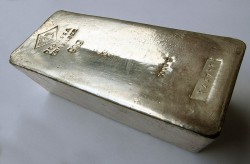 The price of silver has been absolutely exploding lately. It has reached heights not seen since the Hunt Brothers attempted to corner the silver market over three decades ago. But this time there are no Hunt Brothers to blame for the stunning rise in the price of silver. So exactly why are investors buying silver as if there is no tomorrow right now? Well, the truth is that there are a lot of reasons. Investors have been flocking to precious metals such as gold and silver as the value of paper currencies has declined. The euro is incredibly weak right now and the U.S. dollar appears to be on the verge of a major collapse. In fact, the entire financial system is highly unstable right now. In such an environment, investors seek some place safe to park their money, and right now gold and silver are seen as safe harbors. But gold and silver have not been going up in price at the same pace. So why is silver outperforming gold so significantly?
The price of silver has increased by more than 150% over the past 12 months. But the price of gold has only gone up about 30%.
If you invested $100 in the S&P 500 ten years ago it would be worth about$107.48 today.
If you invested $100 in gold ten years ago it would be worth about $569 today.
If you invested $100 in silver ten years ago it would be worth about $1037today.
Clearly something is going on with silver.
Many people are convinced that this is part of a correction that is long overdue. Geologists tell us that there is approximately 17.5 times as much silver in the crust of the earth as there is gold. But today the price of an ounce of gold is about 30 times higher than the price of an ounce of silver.
That would seem to indicate that the price of silver still has a lot of room to grow relative to the price of gold.
In addition, silver is a key industrial commodity and it is constantly being used up. Today, silver is used in a vast array of products and medicines. The following is an excerpt from an official U.S. government report that describes just some of the ways silver is used in society today….
Silver’s traditional use categories include coins and medals, industrial applications, jewelry and silverware, and photography. The physical properties of silver include ductility, electrical conductivity, malleability, and reflectivity. The demand for silver in industrial applications continues to increase and includes use of silver in bandages for wound care, batteries, brazing and soldering, in catalytic converters in automobiles, in cell phone covers to reduce the spread of bacteria, in clothing to minimize odor, electronics and circuit boards, electroplating, hardening bearings, inks, mirrors, solar cells, water purification, and wood treatment to resist mold. Silver was used for miniature antennas in Radio Frequency Identification Devices (RFIDs) that were used in casino chips, freeway toll transponders, gasoline speed purchase devices, passports, and on packages to keep track of inventory shipments. Mercury and silver, the main components of dental amalgam, are biocides and their use in amalgam inhibits recurrent decay.
Estimates vary, but many experts are now projecting that at current consumption rates we will run out of silver at some point during this century.
On the other hand, we are not facing a similar problem with gold. Gold, because it has traditionally been so expensive, is not used in many products at all. The total amount of gold on earth just continues to increase each year.
Silver is also considered to be a lot more accessible for smaller investors. Not many average Americans can afford to do much investing in gold because it is so expensive. But just about anyone can afford a few ounces of silver.
As investors around the globe have watched the Federal Reserve create endless amounts of money and as they have watched the U.S. government borrow endless amounts of money the hunger for precious metals has grown.
The following is what John Browne had to say about the current situation in a recent commentary….
Today, with the Federal Reserve treating the greenback as a never ending lottery ticket for deficit spending politicians, many investors feel the U.S. dollar is good for nothing. As a result there is an increasing international pressure to remove the U.S. dollar’s reserve status. Given that there is no widely accepted alternative to the dollar (the euro has many problems of its own), this is creating fears of an international currency crisis, which has fueled interest in precious metals.
As the U.S. dollar and other paper currencies continue to decline, the demand for precious metals such as gold and silver is only going to increase.
Most investors are not stupid. They know that the European debt crisis is approaching a meltdown. They know that U.S. government debt is not sustainable. They know that all of the paper currencies around the world that are backed by nothing will continue to decline in value just like they always have. All of the major central banks have been recklessly printing money. In such an environment it only makes sense to put your wealth into hard assets.
But there is another layer to all of this. Many now view investing in precious metals as a way to rebel against the Federal Reserve and other central banks. All over the globe people are waking up to how unjust the banking system is. Since central banks such as the Federal Reserve are almost completely unaccountable politically, many individuals have sought other ways to protest the system. Getting out of “Federal Reserve Notes” and into precious metals is one small way to do that.
In any event, what is clear is that the price of silver is likely to continue to go up over the long-term. Silver is used in thousands of products and we are slowly running out of it. Meanwhile, the central banks of the world are absolutely flooding the globe with paper currency. What all of that adds up to is a much higher price for silver.
So what do all the rest of you think about the price of silver? Please feel free to leave a comment with your opinion below….
People who read this article also read:
Subscribe to:
Posts (Atom)